Saturday, 15 January 2022
Travel Reads: Cambridge Book Depot, Mussoorie
Saturday, 17 July 2021
Short Story Reads: A Bond with the Mountains by Ruskin Bond
It is one thing to dream of living a simple, content life in the mountains. But to live the life one writes about, especially of a lifetime spent in deep communion with nature, well, that is something rare and profound.
A Bond with the Mountains is a 1998 slim collection of stories, poems and thoughts by Landour's famous resident writer.
But for the inevitable melancholic tragedy of No Room for a Leopard, the remarkable bonding of the young and old in A Bouquet of Love, nothing overtly dramatic occurs in this collection.
Instead the pages are fragrant with Bond's deep bond (yes, Bond's bond) with all things green, flowering, chirping, flowing and flourishing.
After all Ruskin Bond chose the mountains instead of the (more commercially viable option for a struggling freelance writer) plains, a choice that has defined his writing life and the view outside the window.
Simple things: A New Flower is about a nine-year-old and the writer raving over a newly blossomed yet unknown flower.
How man's drive for speed, comfort and machinery leaves jungle creatures vulnerable to his endless march is gently revealed in the thrilling Dragon in the Tunnel.
No Room for a Leopard is the bullet-pierced heart of this collection, for the impending tragedy of the brutality that follows the arrival of man.
The interpersed poems feel like the sway of branches to the evening breeze. The lines that particularly stand out in Living with Mountains and in a way sums up Ruskin Bond's life journey go:
Once you have lived with mountains, / Under the benedictory pines / And deodars, near stars / And a brighter moon, / With wood smoke and mist, / Sweet smell of grass, dew lines / On spider-spun, sun-kissed / Buttercup and vine; / Once you have lived with these / Blessed God's favourite then, / You will return, / You will come back / To touch the trees and grass, / And climb once more the windswept mountain pass.
This is not an utterly epic, absolutely unexpected collection, but of an elderly narrator living the long sunset of his life in quiet glee. What is dear to him splashes and thrives in these pages.
Stories like The Glacier, My Tall Green Friends, To the River, A Mountain Stream, Tenacity of Mountain Water and Mother Hill are notes from the narrator's journal, counting his blessings and humming his gratitude to mountain life.
The cynics may grumble that Bond could have thrived in writing more complex and layered tales, that he mostly goes semi-autobiographical, and seldom dwells on human anguish and darkness. Apart from not believing in ghosts but seeing them all the time, as he has often said cheekily.
The heartfelt descriptions of natural beauty is what makes Bond's writing appealing, he's just being himself. Like Robert Frost, Ruskin Bond chose the less travelled path and behold! That has made all the difference.
Endnote: A mingling of childhood life, uphill hikes, youth, ice cold stream baths, fireside tales, friendship and radiance, A Bond with the Mountains is about brief, concise pleasures, on the melodious importance of little things, something we city denizens have long forgotten and buried deep in our hearts.
(Article by Snehith Kumbla)
Thursday, 22 April 2021
Short Story Reads: The Visitor by Roald Dahl
How exciting would it be to receive an wooden crate from nowhere at your doorstep?
What would it contain? Who is it from, you would wonder, your hands tingling to rip open its contents.
The Visitor begins with the arrival of one such mysterious crate at the narrator's doorstep.
Much to his astonishment, the crate is filled with books from the long forgotten Oswald Hendryks Cornelius, aka Uncle Oswald.
Thing is, nobody in the family had heard from Oswald in thirty years!
The books are all dairies, twenty-eight volumes, three hundred pages to each volume.
Due to the largely scandalous contents, the narrator after consulting a lawyer choses this one particular account to be safe for publication among all volumes - The Visitor is the very last entry in the last volume.
The incident is referred to as the Sinai Desert episode and is marked to have occurred in 1946 by Oswald.
Our narrator gives us an entertaining, brisk description of the womanizing, adventurous, world traveler Oswald, before reproducing Oswald's last diary entry word to word.
Desert, scorpions and temptation
The first time I commenced reading The Visitor a few years ago, just couldn't put it down and was compelled to run through it in one breathless session.
Uncle Oswald is not just any master seducer, but also a man with eccentricities and relentless daring.
When we first encounter him, Oswald escapes his mistress and takes the road to Jerusalem, ceasing enroute to search for scorpions in the Sinai Desert, one among his many passionate hobbies.
It is when he stops to fill his tank that things start going a bit against his liking.
The attendant tells him that the fan belt is broken and that Oswald has to spent the night in the desert, the new fan belt will only arrive the next day. That is when a Rolls-Royce arrives at the gasoline station...
A classic short story event, among the most satisfying and enjoyable of Roald Dahl short stories for adults, The Visitor has the trademark macabre elements, but the unexpected open-ended turn of it is both chilling and delicious.
In retrospect, the story could have been trimmed, causing the climax to have a more shocking impact, but nowhere does Dahl seem to stall.
Oswald is probably the most enigmatic of Dahl's short story characters, though the novel, My Uncle Oswald wasn't up to my high expectations.
The Visitor first featured in the Playboy Magazine Holiday Special issue 1965 before making its way to the Dahl short story anthology Switch Bitch.
The Best of Roald Dahl is a good Penguin paperback anthology to catch the story. Also, the Everyman hardbound edition, Collected Stories by Roald Dahl is a great compilation to own.
(Article by Snehith Kumbla)
Wednesday, 31 March 2021
Comic Book Reads: The Phantom by Lee Falk
![]() |
| The Phantom: Fighting crime since 1936 |
Before Superman and Batman, arrived the Phantom...
Did the creators of Superman and Batman borrow from Phantom's heroic features?
May be they did, by the likes of it.
Zero superpowers, full of grit, clearly wealthy, outlandish costumes, moral code, just like Batman.
The ghost who walks...
Man who cannot die...
When the Phantom strikes, lightning stands still...
When the Phantom asks you answer...
Call the Phantom anywhere, and he will hear...(yes, even in regions without cellular network...)
Lee Falk's legendary crime-fighting vigilante, Phantom was an addictive, immersive comic book childhood hero, with an unending air of regality and mystery.
A costume that fitted kiddie exagerration hand in glove, mesmerized females - only person supposed to see the Phantom without his mask is his wife, as he mischievously quips in one episode, even as the girlfriend (soon, wife to be) smiles away. Way to go Phantom, you smooth operator!
![]() |
| The 1996 movie version poster |
Adaptation hiccups
Live action movie transition hasn't been smooth for the celebrated crime crusader.
For one the purple spread is jarring in live action, certainly not a colour for camouflage, also the ears bulging out in certain adaptations is funny. The hero's enigma is lost in live action, masked face closing out most emotions.
Having said that The Phantom (1996) seems like a good watch, will be doing a review soon on my blog, Movie Reviews, Mini.
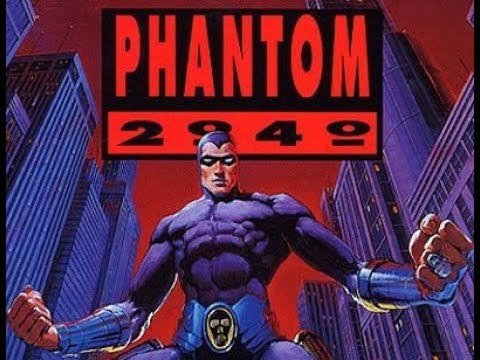
The animation adaptations have been great in some instances, particularly Phantom 2040, a superb well-written futuristic French-American TV series that aired between 1994-1996.
Racial jibes?
The eighties and the nineties were the golden age of comic book reading for me - exceptional, engaging stories, crackling dialogues, beautiful heroines, lavish colouring and illustrations, superb hero-villan face-off, cute, loyal pet animals and trademark mannerisms.
It didn't occur to me then that underneath the costume, it was a first world white man saving the world from third world's darker-coloured villans (among others).
In one's adolescent years, who thinks of that, and as comic book fiction, a lot of it is irreverent, bubblegum fun, apart from when the racist undertones are painfully obvious.
Phantom's wacky origins
The back story for the ghost who walks...man who cannot die... is stuff of legend, classic comic book storytelling, with white supremacy splashes perhaps, you decide.
Falk along with Ray Moore created a origin story that was often repeated in the initial frames of a new adventure, for those who came in late.
Once upon a time, four hundred years ago, the sole survivor of a merchant ship attacked by pirates near the Bay of Bengal, washes up a remote shore, having witnessed the Singh pirates killing his father. The survivor is nursed back to health by natives.
Then many days later, a body washes up the shore dressed in his father's clothes! It's his father's murderer!
Brazenly, I must say, the survivor takes an oath upon the murderer's skull to devote my life to the destruction of piracy, greed, cruelty in all its forms, vowing that the eldest of each generation will succeed him as the next Phantom.
Yet, common folk will think it is the same man, timelessly fighting crime across generations. I love that deceptive part, the fabulous, carefully manufactured and protected myth.
To quote the comic strip:
AS THE UNBROKEN LINE DOWN THROUGH THE CENTURIES, THE ORIENT BELIEVED IT WAS ALWAYS THE SAME MAN! THE MAN WHO COULD NOT DIE! SO THE LEGEND OF IMMORTALITY GREW!
MOVING SILENTLY AND QUICKLY , THE PHANTOM WAS USUALLY KNOWN BY THE SIGN OF THE SKULL, HIS MARK, WHICH HE ALWAYS LEFT BEHIND HIM!
TODAY, AS ALWAYS BEFORE, STRIKING SUDDENLY, MYSTERIOUSLY, THE PHANTOM WORKS ALONE!
Yes, with the same bold emphasis and specifically underlined text.
It did make me groovy to think that the Phantom worked alone, now it seems a bit sad, a kind of self-imposed social qarantine, even though the present Phantom, Kit Walker, has it all, gorgeous, intelligent wife, two lovely kids, thus ensuring employment to future Phantom artists and gifting bloodline continuity to the next Phantom generation.
Did I mention, a cosy skull home deep in the jungle, away from the dreary city pollution with definitely no mortgage, skull ring to leave a mark on his enemies, comfy skull throne, well-guarded secret identity (Hush! Only you and me know!), two faithful animals (Hero, his white steed, more on Devil later) and a protective African tribe.
What more does a crimefighting comic book hero need?
Ultra cool Phantom moment
My all-time favourite Phantom moment:
When airplane authorities don't allow his dog, Devil, into the passenger aircraft as it is against the rules, the Phantom utters with gentle dark sunglasses-adorned relish, "He is a wolf, not a dog."
The authorities, baffled and stunned, allow Devil in.
When the Phantom requests, you comply.
Thank you Lee Falk, and if legend has to be believed, hospitalized before his death in March 1999, Falk narrated the latest Phantom episode to his wife Elizabeth, while tearing off his oxygen mask to do so.
Now there's a hero!
(Article by Snehith Kumbla)
Tuesday, 30 March 2021
Short Story Reads: Interpreter of Maladies by Jhumpa Lahiri
Gifted with an elegance remeniscient of Anita Desai and glowingly compassionate, Jhumpa Lahiri's debut collection of short stories, Interpreter of Maladies (1999) still eminates with delicate, beautifully carved keen insights.
Indians living overseas are pivotal to most of the gathered tales.
A Temporary Matter is about five days of a one-hour power cut and how it causes a young couple to converse and reflect. The premise may seem ordinary, but Lahiri weaves lively stems of thoughts, imagery and conversations to carve out the intricacies of a fragile marriage.
Tonight with no lights, they would have to eat together. For months now they'd served themselves from the stove, and he'd taken his plate into his study, letting the meal grow cold on his desk before shoving it into his mouth without pause, while Shoba took her plate to the living room and watched game shows, or proofread files with her arsenal of colored pencils at hand.
- Excerpt from A Temporary Matter
When Mr. Pirzada Came to Dine is a weaved mix of history, house guests and human tenderness in a heartfelt tale. The blood-splattering formation of Bangladesh is a moving canvas to this account of families, geographies, meetings and partings.
![]() |
| Jhumpa Lahiri (file photo) |
Interpreter of Maladies is about unique human connections and separations, rarely explored in a short story, loosely parallel to the universal spirit in Rabindranath Tagore's writings. Rich in descriptive prose, the oddities of bonding in transit are magnificently explored, a story that places Lahiri among the best short story specialists.
The vulnerable life of the downtrodden is given strong emphasis and sensitivity in A Real Durwan. A powerful yet understated turn, a social take that evokes sympathy without any exagerrated drama.
Stunning debut collection
The other stories offer unique insights and perspectives into contrasting lives, different cultures, complexities of human relationships, expressed in graceful, unblinking, lush, intelligent detail.
The publication lead to deserving rave reviews, with Lahiri gaining prominence as an important literary voice over subsequent decades.
If I were to look for enhancements, would be more infusions of lightness and humour. But these are merely afterthoughts, for the writer's hold on her craft is exemplary throughtout, haven't read anything as fluid in ages.
As if Lahiri was destined to echo, amplify the voice of immigrants and the disowned through her yarns.
(Article by Snehith Kumbla)
![]() |
| Jhumpa Lahiri photographed for Financial Times article (2019) |
Monday, 29 March 2021
Non-Fiction Reads: Sholay: The Making of a Classic by Anupama Chopra
The first time I saw Sholay (1975) was on national television in the late nineties. It was also the first time the movie was telecast on Indian television, I found out later.
Sholay never felt four-odd hours long on that first viewing. I mourned a major character's death way past the end credits, and an unbreakable fan-movie bond was forged.
Sholay (Embers) has the epic wide landscape features of Sergio Leone westerns and is yet endearingly Indian in its earthiness, dialogues, acting style, song and dance sequences. There haven't been many befitting mixed genre, adventure, buddy movie experiences like Sholay in popular Indian cinema.
The movie still holds my cinematic imagination and I am a huge fan now of its filminess, well-moulded Western elements, imperfections, memorable dialogues, detailed train robbery scene (standout action sequence), overdone water tank top jokes, largely sturdy acting, good music, and popcorn-crunching screenplay.
So much that I run a blog, Sholayism and was among the select few who saw Sholay in 3D at the theatres, on its limited one week run.
Unexpected,fun stories
Sholay: The Making of a Classic (2000) was a story screaming out loud to be told and Anupama Chopra tells it with spunk and great enthusiasm. An exclusive collection of colour and black & white photographs also decorate the pages.
Each chapter is wackily titled after a popular Sholay dialogue. The anecdotes are well spaced out, aptly arranged chronologically, and ending with an actor breaking down on realizing the magnitude of his popularity.
How did a lead actor lose out on a great opportunity, what was it about the Salim-Javed writing pair, the unlikely outdoor location in Karnataka, a villian who everybody had their doubts on, how the dialogue audio cassettes sold more than the soundtrack, why the director-cinematographer chemistry is so important, among many other interesting tales, when shooting a magnum opus was a daunting challenge, than it is today.
If you immensely love movies, you will love discovering how much passion, madness, technicalities, patience and self-belief goes into creating a landmark cinematic experience.
(Article by Snehith Kumbla)
Wednesday, 24 February 2021
Non-Fiction Reads: Khullam Khulla: Rishi Kapoor Uncensored with Meena Iyer
The Kapoors, Cinema's first family
![]() |
| Art in the blood: Rishi Kapoor, years before Mera Naam Joker (1970) |
Movie star craziness
My grandfather was only fifteen or sixteen years old when he chose to become a stage actor. And his foray into the film industry was heralded by no less a figure than Rabindranath Tagore himself.
- Book Excerpt
![]() |
| Kapoor in his first blockbuster Bobby (1973) |
![]() |
| With Amitabh Bachchan in 102 Not Out (2018) |
Featured Post
Poetry Reads: Fragrance and other poems by Snehith Kumbla
The second edition front cover This is convey , with much joy, that I have published a selection of my poems on Amazon Kindle and paperback....
-
Now, I haven't read The Puffin Book of Poetry for Children in its entirety, but a selection of poe...
-
WJ Turner (1889-1946) grew up in Melbourne, he later moved to London where his first collection, The Hunter and other Poems (1916) wa...
-
RK Narayan (1906 - 2001) Most of RK Narayan's novels and short stories are set in the fictional, sleepy town of Malgudi, somewhe...